
All India Radio, 1936
Location : Parliament Street
People : Lionel Fielden (Controller of Broadcasting), H.L. Kirke (BBC Research Engineer), C.W. Goyder (BBC Chief Engineer)
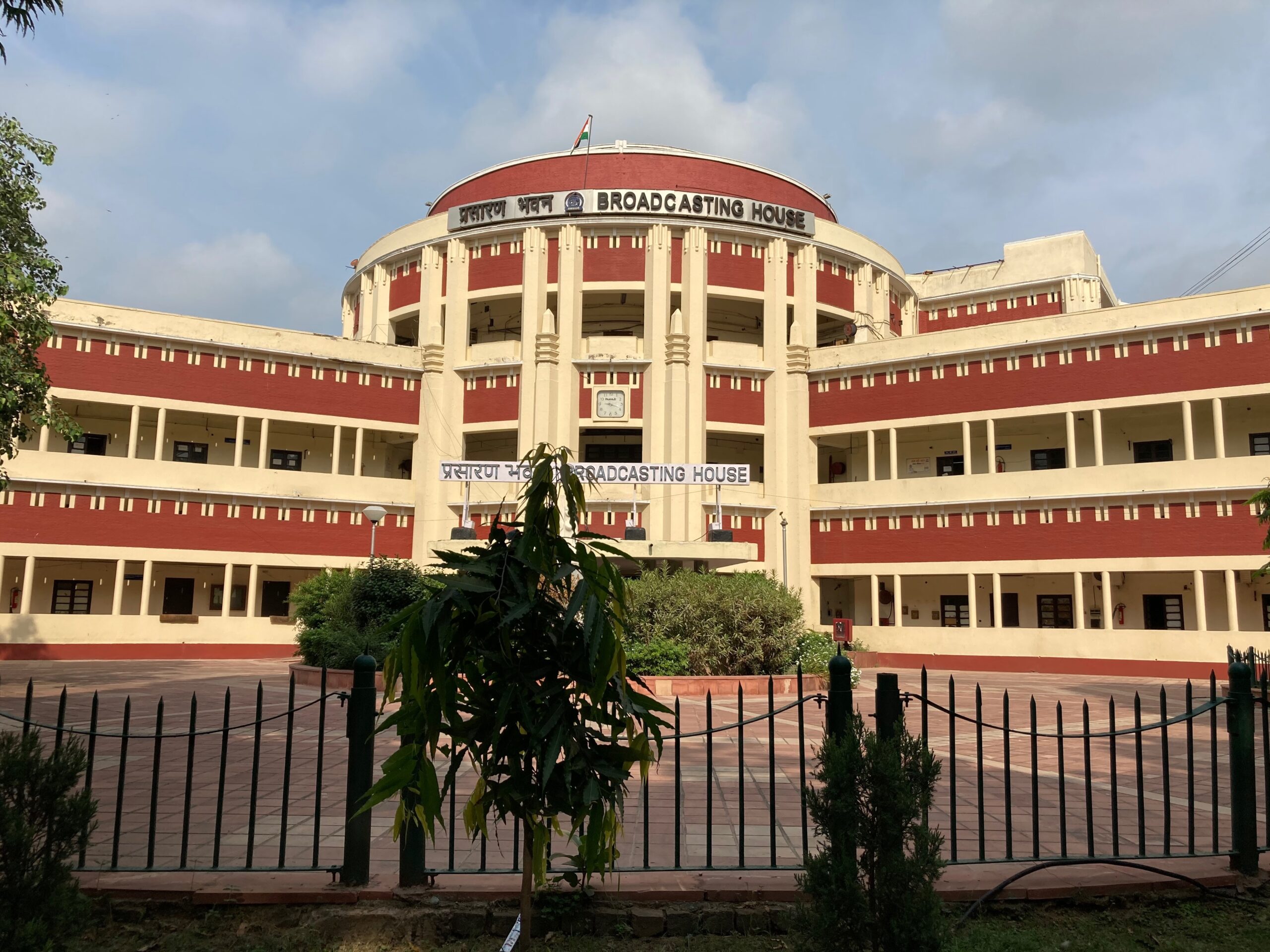
In India, the story of broadcasting flourished significantly in the year 1936. To further the development of broadcasting, the government acquired the services of Lionel Fielden of the BBC who came to India in August 1935 and assumed charge as Controller of Broadcasting. The central station at Delhi was inaugurated on New Year's Day of 1936. Following which, Fielden felt he needed the assistance of technical expert to help him drawing up plans for the expansion of radio. Thus H.L. Kirke, a distinguished BBC research engineer, came to India on 23rd January 1936.Together Lionel Fielden drew up a plan which was adopted with modifications after the appointment of a Chief Engineer, Mr. C.W. Goyder, also of BBC, who assumed charge in August.
Post the opening of the AIR Station in Delhi, cultural and educational activities such as Arts, Education and Music gained momentum. News Service departments and Research departments were started in AIR and Radio was looked upon by new light.
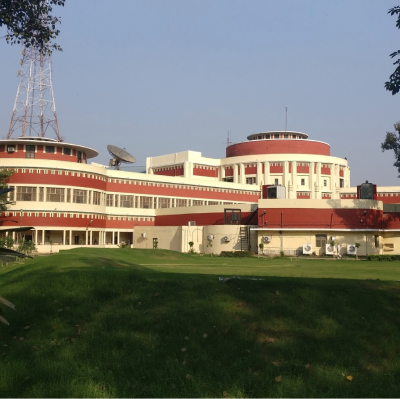
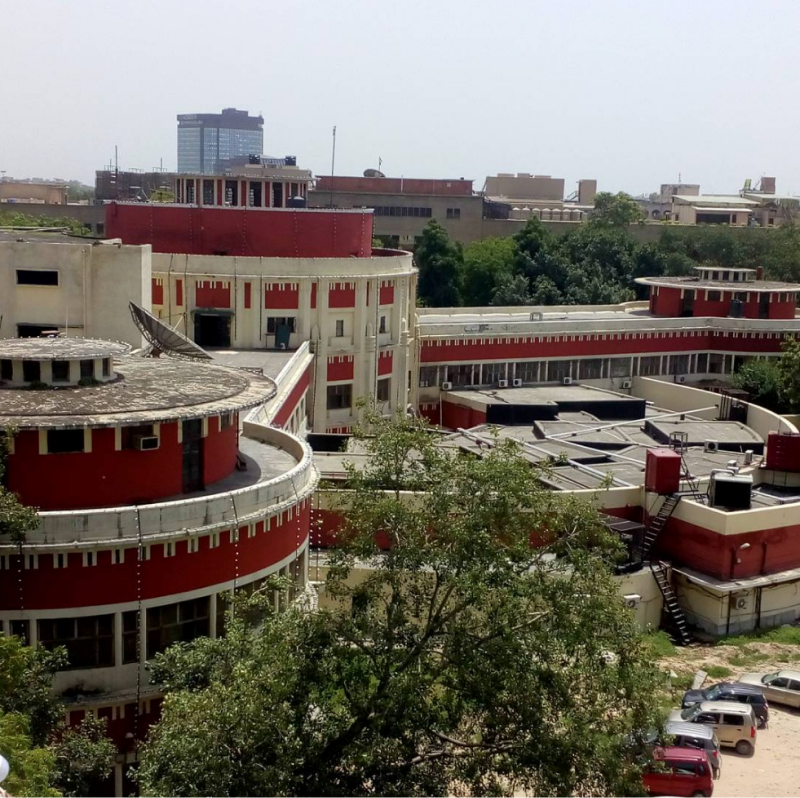
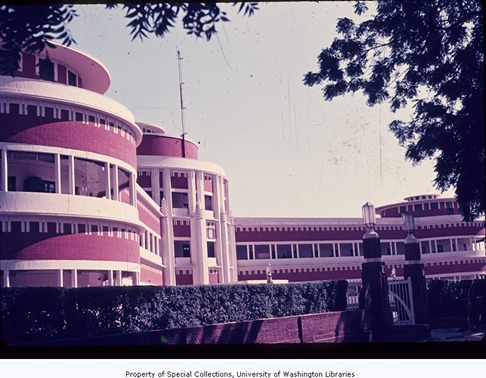
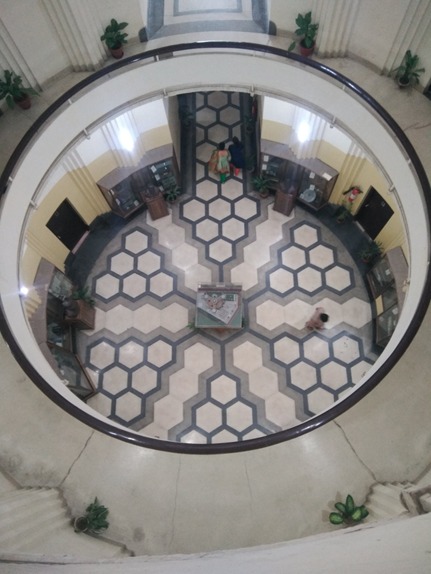
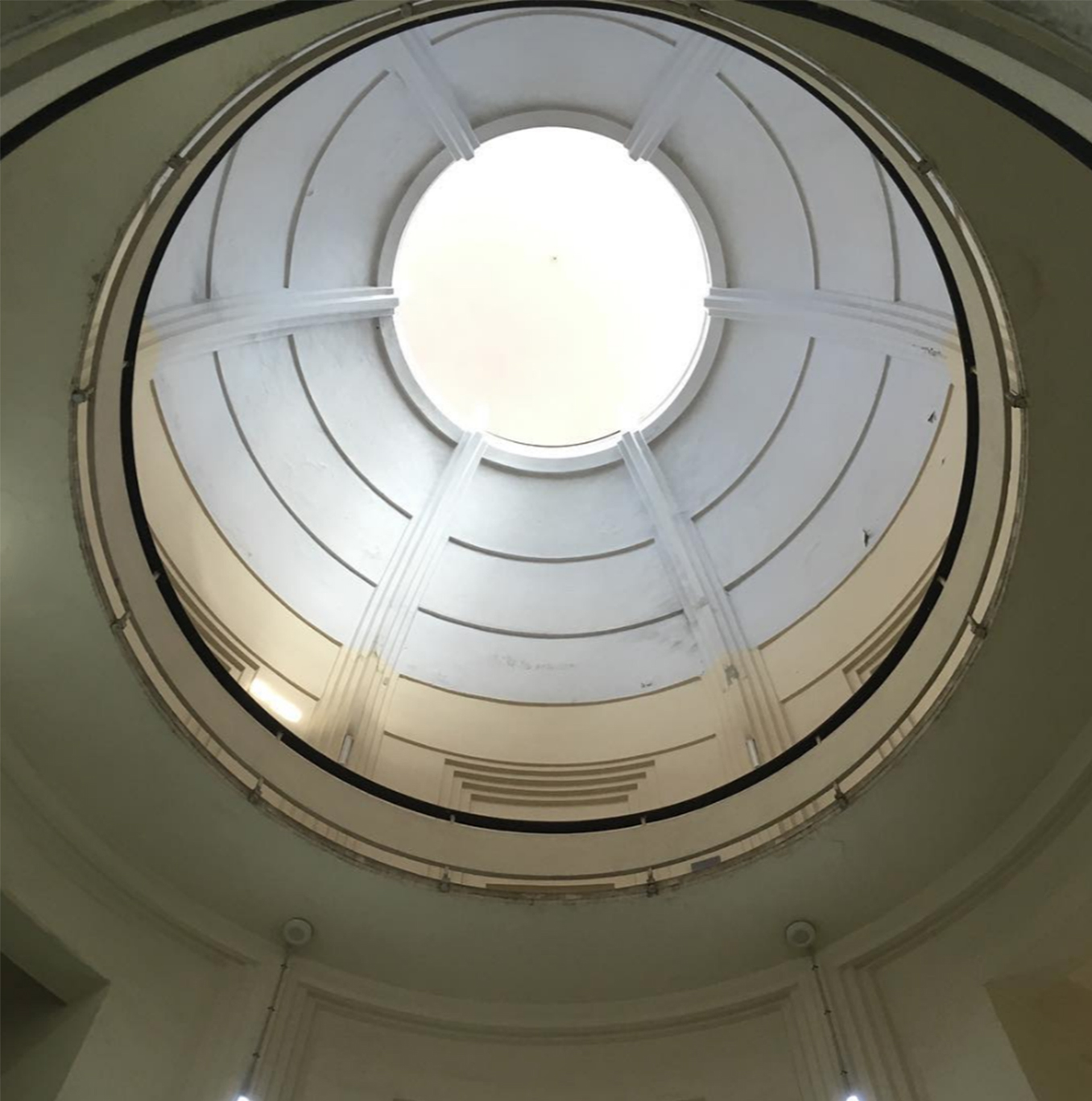
The building adorns Art Deco features in its cream colored vertical flutes lined up against the brick red backdrop, the low relief vertical lines running horizontally on top along the entire building, the bulbous circular form, curved edges and the flat roof. Inside, one can spot the recessed lines detail within the building atrium. Some interesting details in the terrazzo flooring are also seen in the form of the honeycomb-like structure, geometric criss-cross pattern along with the star shapes.
Image Credits : External View (2) : Sanjiv Baruah (Instagram published)
Image (4) : University of Washington Libraries
Interior Images : Bhawna Dandona & Suruchi Shah
References : Radio Broadcasting in India, Mahavirji Singhal Patrakar, Ministry of Information and Broadcasting
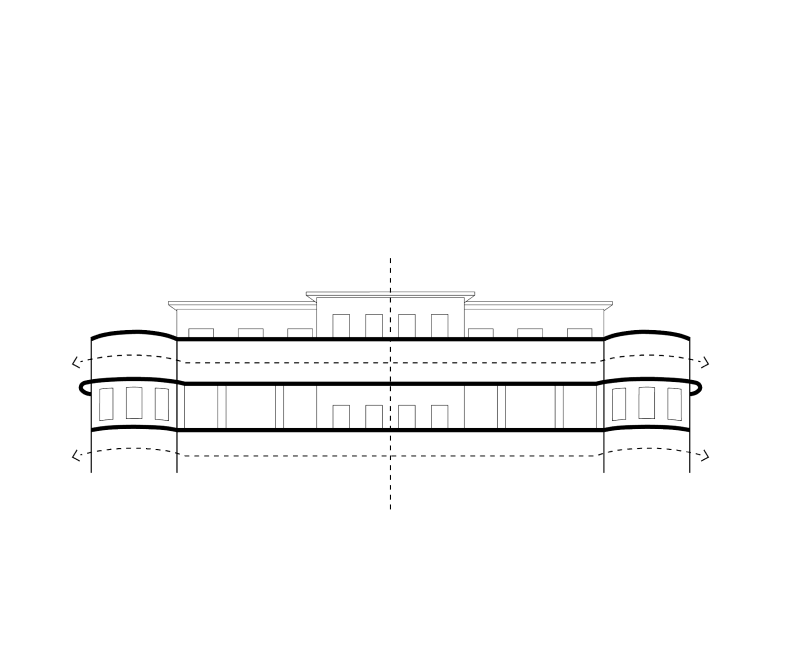
Streamline Profile
Emphasis is laid on horizontal wings of the buildings through features like eyebrows, continuous overhang. Building edges often have mirrored curved circular towers encompassing staircases in them
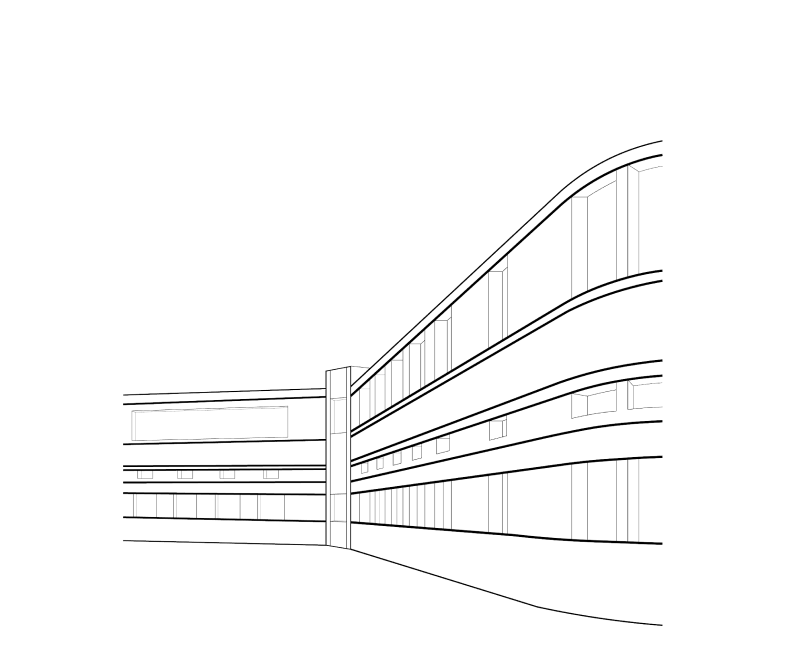
Speedlines
Bandings to accentuate the horizontality of surfaces. A distinct feature in buildings inspired from the Streamline Moderne version of Deco

Terrazzo Finish
A mix of Coloured cement with Terrazzo works adding to the details of craftsmanship within the style. Vibrant coloured floors were common to Art Deco interiors and coloured cement further enhanced the details.